

The closures
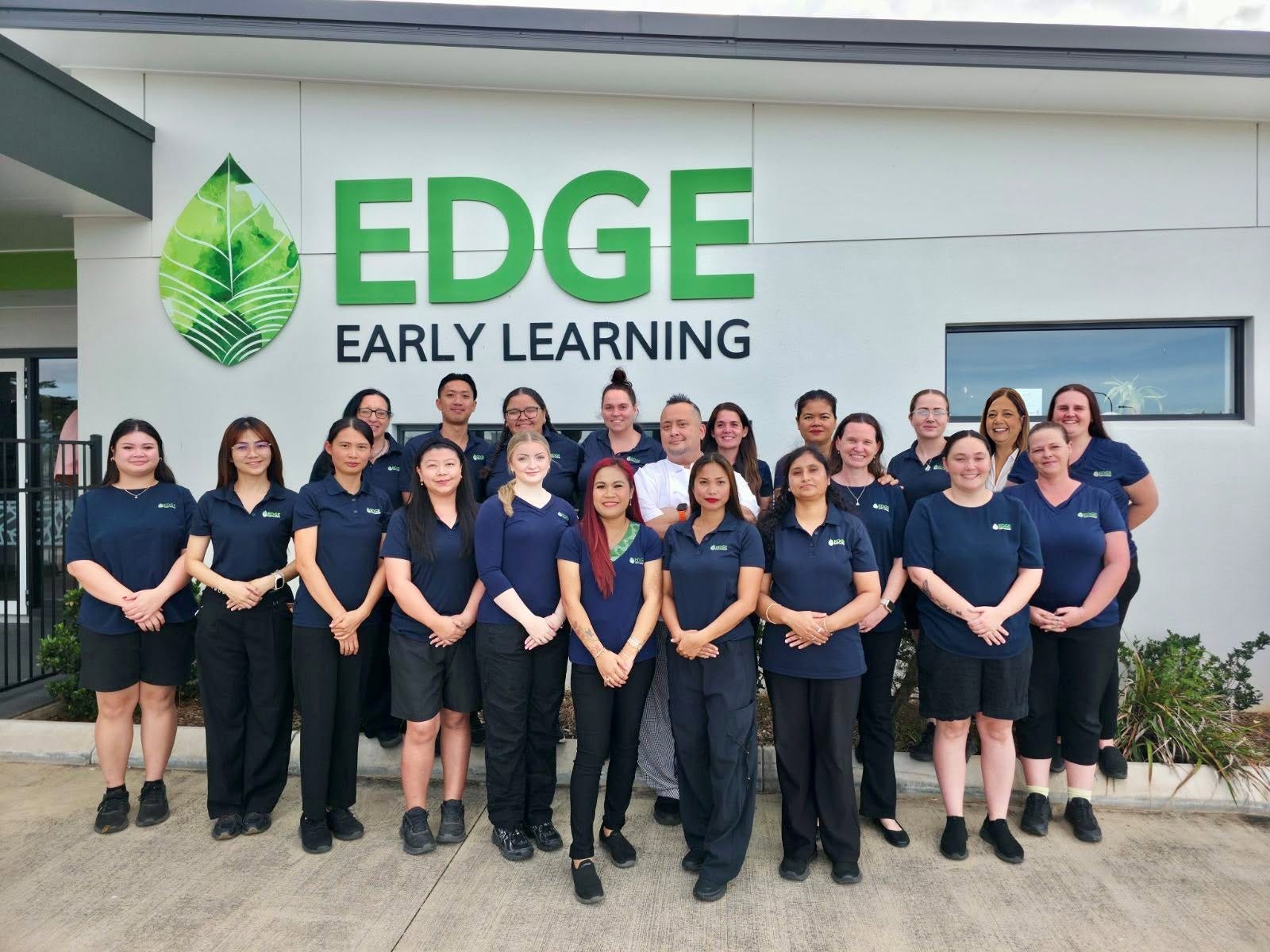
Edge Early Learning appointed administrators on Tuesday. It lists 68 centres, 42 in Queensland, 24 in South Australia and two in the ACT. Three of the South Australian centres were already closed after breaches found by the state’s Education Standards Board. Hours after the administration was announced, the ACT regulator ordered the Charnwood centre to close for three months, about a month after forcing another Canberra centre to shut over its response to a serious incident.
The same day, families at a centre in Melbourne’s north-west were told at 6:40pm that it had been liquidated and would not open in the morning. Not at the end of term, not in a fortnight, that night.
In April, G8 Education suspended forty centres. Its spot occupancy at the end of that month was 56.4 per cent, down about seven per cent year on year, on a net loss of $303.3 million for 2025. Chief executive Pejman Okhovat named confidence being affected by serious child safety incidents among the pressures on the business.
I know abuse isn’t the only thing driving this. Birth rates are down, cost of living is biting, wages and compliance costs are up, and plenty of these centres were built before demand plateaued. But an ASX-listed company doesn’t put child safety incidents in a market update unless it’s showing up in the numbers.
The parents who never enrolled
Research from the Sexual Violence Research and Prevention Unit at the University of the Sunshine Coast, republished by The Sector last week, surveyed more than three hundred Australian parents of children under five. The parents who weren’t using childcare at all placed a stronger emphasis on safety than the parents who were.
The researchers offered two readings. Maybe families relax once they’ve built a relationship with a service. Or maybe safety concerns are keeping some families out of the system entirely.
The sample is small, self-selected, and mostly Queensland mothers, so it can’t prove which reading is right. But it points the same direction as the occupancy rate.
The most safety-conscious parents are the least likely to be enrolled.
Eight tours
A friend of mine toured eight childcare centres this year.
The question she was actually there to ask, underneath the questions about ratios and fees and nap times, was whether her daughter would be safe from being abused.
She never said it like that. What she said was, I’m just concerned about safety. Can you tell me what you do to manage it?
She was embarrassed to ask, so she left the word abuse out of it and hoped somebody would hear it anyway.
At seven centres, nobody did. She got answers about fencing and sign-in procedures and police checks.
At the eighth, the director heard exactly what she was asking and started answering it. Protective behaviours training for the children. Two carers in the bathrooms and the nappy change area. Cameras in the main rooms and the blind spots, and not in the bathrooms, because that’s what the two-carer policy is for. A rule against putting up tents, because a tent is a blind spot you can set up in four seconds.
Then my friend watched her move through the building for the rest of the tour, and the director did all of it. Where she stood. What she looked at. My friend spent years reading organisational policy for a living, so she can tell when an organisation has thought about something rather than written it down.
That’s where she enrolled her daughter. It was also the most expensive place she looked at.
The embarrassment
Seven directors didn’t hear it, and my friend still apologised for asking. That’s the part I can’t get past. I actually interrupted her while she was telling me the story.
I stamped my foot in frustration. I said, hey, why are you embarrassed? Why should we be embarrassed? Our children have a right to safety.
She was about to hand her infant to a building full of strangers, several days a week, for years. She is that child’s only advocate. There is nobody in that building whose sole job is to protect this particular child. And she felt rude bringing it up, so she softened it into something vague and hoped for the best.
I understand it completely, because I feel it too, after everything.
Asking the question implies you suspect the person in front of you. You need the place, there’s a waiting list, they hold the enrolment, and the whole exchange is built on you proving you’re a reasonable parent and not a difficult one. So the silence doesn’t sit with the institution. It gets handed to the person with the least power in the room, and we carry it.
The director on that eighth tour did the single most important thing anyone in this industry can do, and nothing in the national regulations required her to do it.
She pulled the elephant into the middle of the room so my friend didn’t have to.
Say their names
There’s a question my friend didn’t ask, and almost nobody does. How will you teach my daughter to name the people who care for her?
Not just the two educators in the room she loves. All of them. The floater. The relief staff. The person who covers the afternoon shift. The agency staff who come in when someone calls in sick, and the ones who came in last week and won’t be back.
A toddler who cannot name an adult cannot make a disclosure that survives contact with an investigation. She can tell you what happened. Maybe she can tell you where in the building it happened. Then somebody asks her who, and she says carer, or she says nothing, and everyone around her starts guessing. Guesses don’t get charged. That’s how a matter closes without a finding, and the highest-risk staffing category, the casual who was there for one shift and gone, is exactly the category no child can name.
Ask it on the tour. How do you teach the children the names of everyone who works here, including the relief staff? Do you tell us when a new person is in the room? It should be as ordinary as telling you what your kid had for lunch.
What the reforms actually reached
A National Early Childhood Worker Register went live on 27 February. Mandatory child safety training started the same day, and the deadline for every existing worker in the country to finish the foundation course fell this week. Personal devices are banned. The government says it has tripled fines. There’s a CCTV trial in up to three hundred services. Since August 2025, more than 60 centres have had conditions placed on them, one has been closed, and nine failed to meet standards by their February deadline. Education Minister Jason Clare put the package at $226 million, including $45 million to build the Register and up to $40 million a year for the training.
Some of that is genuinely good, and I’ll say so plainly because anyone in the sector reading this deserves to know I recognise the progress. The register closes a real hole. The extended limitation period matters, because children disclose late and the old clock ran out before they’d found the words. Cutting off the subsidy is the only lever that has ever made this industry move quickly.
They’ve gone further than that, too. In December ACECQA ran a rapid assessment of how ratios are actually applied. It found that a 2014 amendment let providers count educators “across the service” rather than in the room the children were in, and that some were using it to cut corners. Almost three-quarters of educators and teachers said there was no situation where counting that way allowed adequate supervision. Only about half of approved providers agreed with them. The people standing in the room and the people who own the building do not agree about what safe looks like.
Education Ministers accepted every recommendation, agreed to strip “across the service” out of the National Law, and agreed to define adequate supervision. Six months on, I can’t find confirmation that the amendment has commenced.
But say it has. Say it all works.
Every one of those measures still points at the worker, the provider, the regulator or the building. Not one of them reaches the parent or the child.
Nothing anywhere requires a service to teach a two year old the correct words for her body, or what a tricky secret is, or that no adult in that building may ask her to keep one. Nothing requires a second carer in the nappy change room. Nothing requires anyone to tell you who is in the room with your child today. Every single thing that reassured my friend on that eighth tour was optional.
And nothing at all stops your child being alone with one adult. Ask your centre.
The ratio for babies is one educator to four children, and that isn’t a loophole anybody is closing. It’s the standard. One adult alone with four infants is fully compliant. Adequate supervision, as ACECQA defines it, means knowing where children are and being able to respond immediately, especially to a child in distress, and one adult alone satisfies that. Regulation 115 requires premises designed and maintained to give clear lines of sight, including into toilets and nappy change areas. That’s a rule about the building. It requires that someone could see, not that anybody is looking.
So your daughter can be in the sandpit with one carer while another adult glances out a window above the slide, and every box is ticked.
It was never safe. And parents aren’t buying it.
Compare that to a school. In New South Wales, child protection education is mandatory in every stage from Kindergarten to Year 10 under the PDHPE syllabus. Recognising unsafe situations, seeking help, knowing who to tell.
So a five year old walks into Kindergarten and the state requires that somebody teach her how to protect herself. Twelve months earlier, in long daycare, at the age where she can’t reliably tell you what happened to her, there’s no equivalent requirement at all.
The price
My friend’s centre was the most expensive one she toured. Everything on that director’s list costs money. Protective behaviours sessions, cameras, and two carers in the change room instead of one.
One tour doesn’t prove expensive centres are safer, and I’m not claiming it does. Plenty of premium operators have been in the headlines this year.
But if the only reliable way to find a genuine safety culture is to be able to afford one, we haven’t built a child protection system. We’ve built a product tier, with safety at a premium.
Minderoo said last October that governments have to create the conditions that stamp abuse out before it occurs instead of responding after the fact, and warned against a funding model that rewards profit over safety. Both halves of that sentence are still waiting.
Ninety-nine per cent of educators have finished course one. There’s a register. There are cameras in three hundred buildings. The fines are bigger. And a mother at a gate at eight in the morning still can’t find out who’s in the room with her kid today, whether that person started last week, whether anyone has ever raised a concern about them, or what her daughter has been taught to do if something happens.
Compliance is not the same thing as safety, and safety-conscious parents are starting to spot the difference.
What I actually mean by a safety culture
I don’t mean cameras. I’m in favour of them, but they only record what has already happened to your child.
I don’t mean a training course. One foundation module and a refresher every two years is a floor, and it beats the nothing that existed two years ago. But putting a casual educator in front of an online module in her own time does not change what happens when she raises a concern about a colleague and gets told she’s being unfair to them.
A policy in a folder behind reception, available on request, isn’t one either.
A safety culture is a service that puts the subject in the middle of the room before a parent has to, the way that director did. It teaches protective behaviours to the children in words one and two year olds can use, and teaches the parents at the same time so the language matches at both ends. Every child knows the name of every adult who touches her, including the temp. And two adults are in every space a camera can’t go, written into the national regulations rather than left to whichever operator happened to think of it.
Almost none of that needs new legislation. Every operator could do most of it by next week. It isn’t happening because none of it sits on a compliance checklist, and this industry has spent fifteen years learning that what gets audited is what gets done.
That’s the pattern in every industry that ever cleaned itself up. It was never conscience. It was liability, insurance, and the moment customers started walking.
What to ask
Don’t ask whether safety is a priority. Nobody has ever failed that question.
Ask these, on the tour, before you enrol:
What do you teach the children here about their bodies and about secrets, at what age, and what will you send home so I can use the same words?
Does my daughter know the name of every adult who works here, including the relief staff, and will you tell me when that changes?
Then watch. A few will have answers ready because they’ve thought about it. Most will tell you their staff have completed child safety training, which is not an answer to either question, and the distance between those two responses is the most useful thing you’ll learn all day.
If you feel embarrassed asking, notice the feeling and ask anyway. The embarrassment isn’t yours. It was handed to you.
The real test is whether they raise it before you do. Until that’s ordinary, and until it stops being something you have to pay extra for, we’re relying on one director in eight.
Sources: Education and Care Services National Law, section 165 (offence to inadequately supervise children); Education and Care Services National Regulations, regulations 115, 122, 123, 168, 170 and 171; ACECQA, Rapid Assessment of Child Safe Practices, December 2025, published February 2026; ACECQA definition of adequate supervision; National Early Childhood Worker Register, commenced 27 February 2026, administered by ACECQA; Australian Government Department of Education, national child safety training requirements, foundation training deadline 27 August 2026; Minister for Education, safety in early education and care update, 27 February 2026; Edge Early Learning voluntary administration, KordaMentha appointed 25 August 2026; Children’s Education and Care Assurance suspension notice, Charnwood, August 2026; South Australian Education Standards Board closures, 2026; G8 Education market announcement and FY25 results, April 2026; Mayfield Childcare guidance withdrawal, July 2026; Priebe, McKillop, Christensen and Rayment-McHugh, Sexual Violence Research and Prevention Unit, University of the Sunshine Coast, parent safety survey, August 2026; Minderoo Foundation media release, 28 October 2025; NSW Education Standards Authority PDHPE K-10 Syllabus, child protection education requirements.
Legal and Privacy Concerns. Under Australian privacy laws and for personal safety, the author uses a pseudonym and AI-altered imagery. This work features literary and reflective essays expressing a subjective lived experience; it is not a legal or investigative record. All references to harm or conduct reflect the author’s honest opinion and personal interpretation of events. Regarding the matters referenced, police investigations resulted in a finding of no offence detected; this work is an exploration of the psychological interpretations and healing that follow such experiences. While the author is a psychologist, the views expressed here are personal and do not constitute professional psychological advice or a clinical opinion.
Your voice belongs in this conversation.